
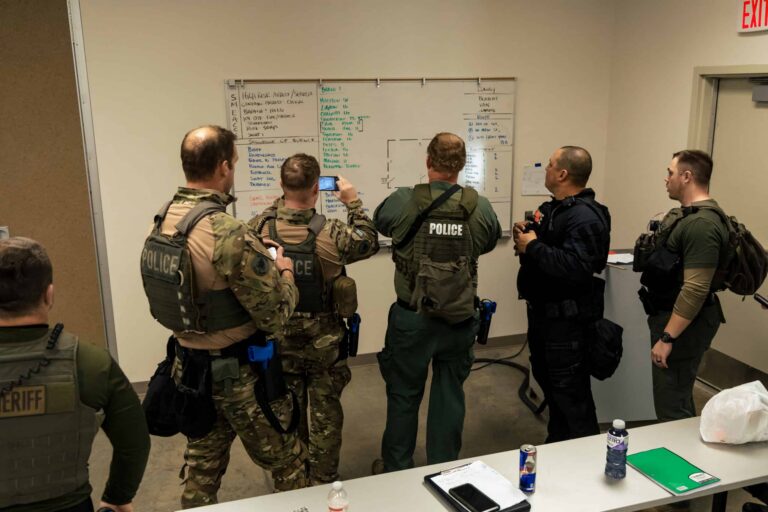
I remember standing on the range, watching a group of new operators we had just pushed through our internal “basic SWAT.”
We called it a week. In reality, it was four days.
Not because that’s what we believed was right—but because that’s what we could afford. Time, staffing, and budget always dictate reality.
We compressed the schedule. At the end, the boxes were checked. But something was missing. It wasn’t effort. It wasn’t attitude. It was repetition—and depth.
We didn’t fail to train them. We shorted them.
Internal SWAT training programs do a lot of things well. Most teams are strong in the areas they prioritize—shooting, CQB fundamentals, and physical intensity. You’ll see operators moving quickly, running drills in full kit, helmets on, and chinstraps buckled, pushing from one evolution to the next.
This builds:
But capability isn’t built on movement alone.
The harder skills—the ones that tend to get compressed—are the ones that matter most when things aren’t perfect. Decision-making under pressure, problem-solving in dynamic environments, and leadership at the individual operator level all take time to develop. They require repetition, variation, and structured feedback. Those are the first things lost when training gets condensed.
According to the National Tactical Officers Association (NTOA) Tactical Response and Operations Standards (TROS), operators should complete a minimum of 40 hours of basic SWAT training prior to deployment.
That number is important—but often misunderstood.
It is:
Meeting the standard does not mean the operator is prepared.
In practice, even the 40-hour standard is often compressed. When that happens, the first thing lost isn’t curriculum—it’s repetition. And repetition is what builds performance.
Internal programs may provide:
But real-world capability requires:
That’s the gap.
SWAT performance is not built through exposure.
It’s built through repetition.
Repetition creates:
Without enough reps, operators may understand the concept—but struggle to execute under pressure.
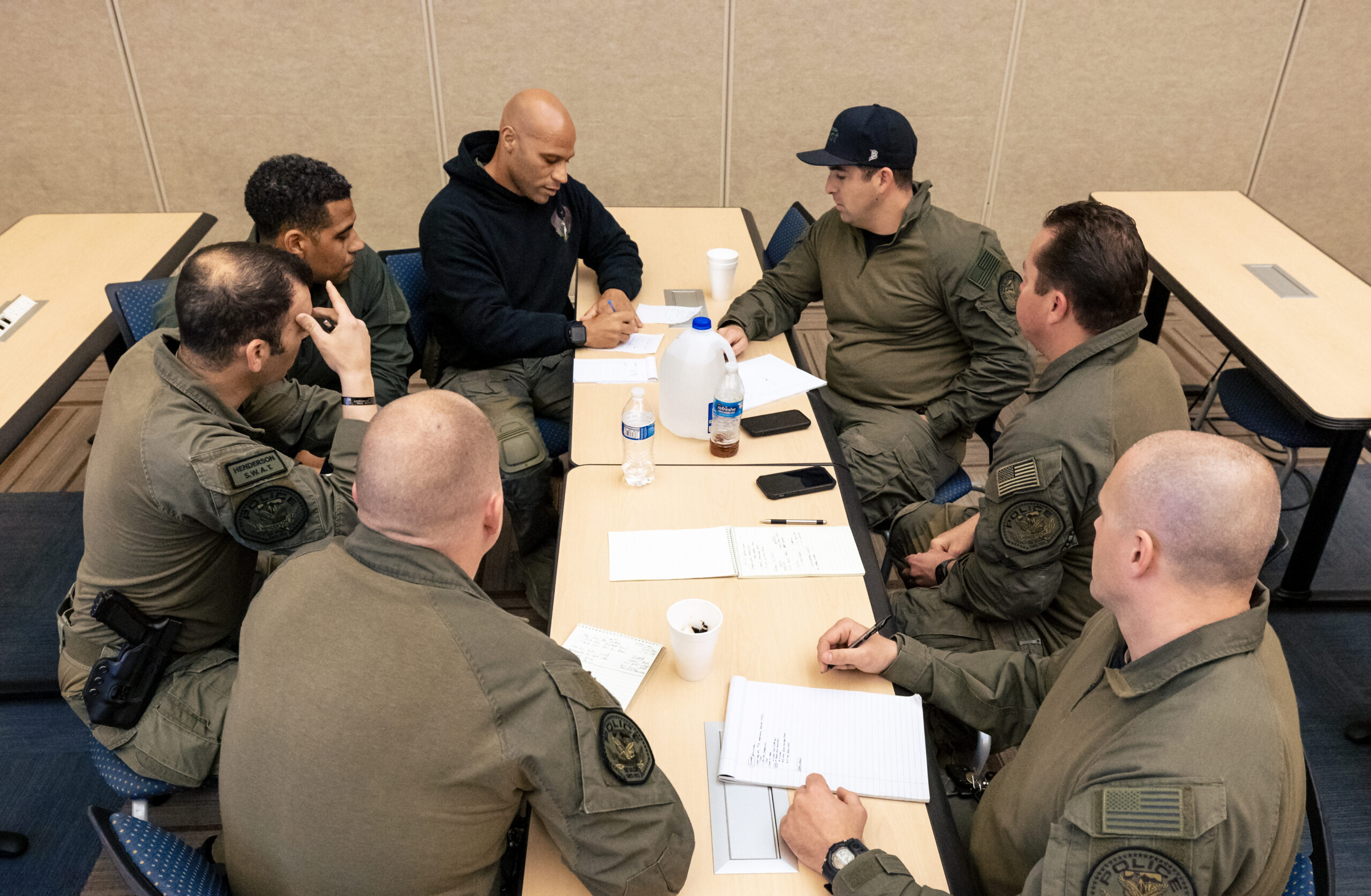
There’s also a misconception that basic SWAT programs should emphasize physical conditioning. The reality is you’re not going to make someone significantly more fit in a week. What you can do is expose them to operational tempo—moving fast, working in full kit, and functioning under fatigue.
But better conditioning doesn’t solve tactical problems.
Better thinking does.
We’ve also seen the other side of the equation—sending operators to outside schools. Sometimes they come back with habits that don’t align with team SOPs. That’s real, and it requires correction. They also return with something valuable: broader exposure, new perspectives, and a deeper understanding of the craft.
Internal training:
External training:
Neither is complete on its own.
Operators returning from external SWAT training often bring:
Without reintegration, this can create inconsistency.
Teams need a structured process to:
This step is critical.
Layer in the monthly training reality, and the challenge becomes even clearer. Most teams train once a month for less than ten hours. National recommendations suggest closer to fourteen hours per month. Over time, that difference compounds into fewer repetitions, slower development, and reduced confidence under pressure.
Over the past five years, High Threat Training Group has trained more than 400 operators in basic SWAT programs. That experience has shown a consistent pattern across agencies of all sizes. Teams don’t lack effort. They lack time, structure, and repetition.
We’ve seen smaller and rural teams come through training and walk away with more than just skills. They gain structure. They refine SOPs. They build consistency across the team. Not because they weren’t capable before, but because they finally had the volume and framework to develop those capabilities.
Internal SWAT training appears cost-effective—but often isn’t.
Running a course requires:
Hidden costs include:
For small classes, cost per operator increases significantly.
The takeaway isn’t that internal training is wrong. It’s that it’s incomplete on its own.
Performance isn’t built on exposure.
It’s built on repetition, feedback, and the ability to think under pressure.
That’s the standard that matters.
High Threat Training Group focuses on closing that gap by delivering structured, high-volume training that develops not just shooters—but thinkers.
Because when performance matters, thinking is what wins.
For agencies looking to improve training volume and structure without overextending internal resources, hosting a High Threat Training Group course provides a practical solution. It allows departments to train more operators at once, reduce travel costs, and leverage an established curriculum—without absorbing the full burden of building and staffing a course internally.
Learn more:
https://highthreattraining.com/host/
https://highthreattraining.com/swat-training/