This is Part Two of HTTG’s low-light sniper training series.
Read Part One: The Low-Light Sniper Training Problem before applying the principles below.
When NVG or thermal is unavailable, low-light sniper training principles become even more important. Ordinary light, disciplined observation, and structured training do not replace policy, qualified instruction, or agency-specific decision standards. They help teams understand what the available information supports—and what it does not.
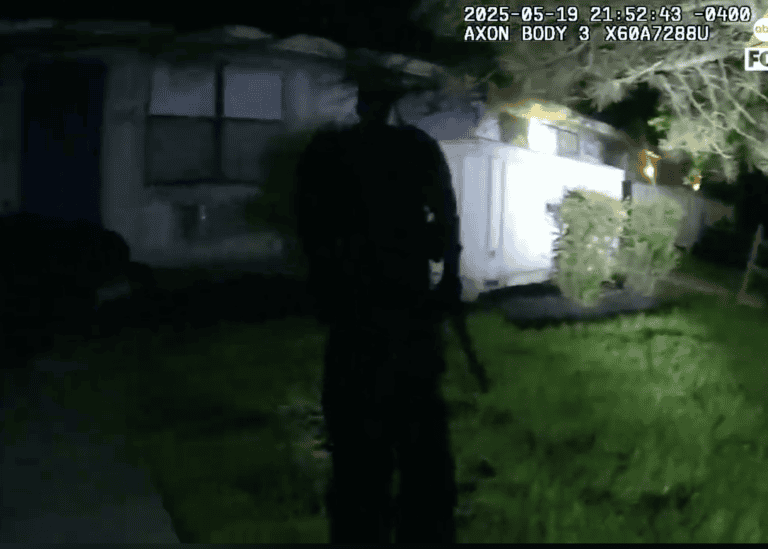
The first principle of low-light sniper training is simple: describe what can be confirmed before describing what is believed.
At the basic level, the learner should be able to state, “I can see a person-shaped figure,” “I can see movement,” or “I can see an object but cannot identify it.” At the advanced level, the learner should explain why the available details support—or fail to support—a more specific conclusion.
A sound observation report preserves three levels of information:
The correct answer in a training exercise may be, “I cannot identify it.” That is not a failed observation. It may be the most accurate observation the conditions allow.
A light source can make a scene brighter while creating glare, hard shadows, reflections, or uneven contrast. A bright background can make a person appear as a silhouette. Grass, scrub, vehicles, structures, and other foreground features can block or scatter light and create misleading shadow patterns.
The training question is not simply whether illumination increased. It is whether the observer gained the identity-critical detail needed for the report.
Learners should practice describing how confidence changes after:
The point is not to assign a universal recovery time or lighting threshold. The point is to make visual conditions part of the report and review.
When NVG or thermal is unavailable, ordinary white light may improve the information available for identification. It should be treated as an observation aid with tradeoffs, not as a guarantee that every detail is now resolved.
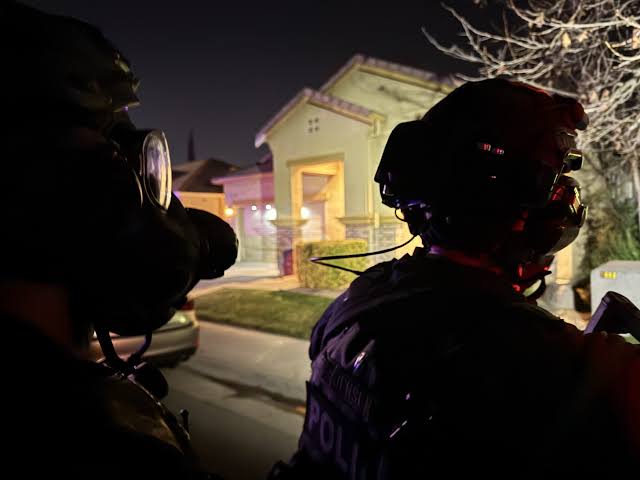
Temporary scene lighting or an area flood light can increase reflected light and help distinguish people, objects, and background features that otherwise appear only as silhouettes. It may also create glare, uneven illumination, deep shadows, and confusing contrast.
Training should ask: After the scene was illuminated, which details became reliable and which remained unresolved? A brighter image is not automatically a more accurate image.
A strong handheld or weapon-mounted flashlight may provide a rapid way to add identifying information when its use is authorized by policy and supported by qualified instruction. White light can reveal color, shape, hands, clothing features, or objects that ambient light does not provide.
It can also create glare, reflections, shadows, and a visible signature. A light does not independently establish identity, intent, threat, or authorization for force. Weapon-mounted light discussion should remain subject to agency instruction, manufacturer guidance, muzzle and trigger discipline, and the legal standards governing the encounter.
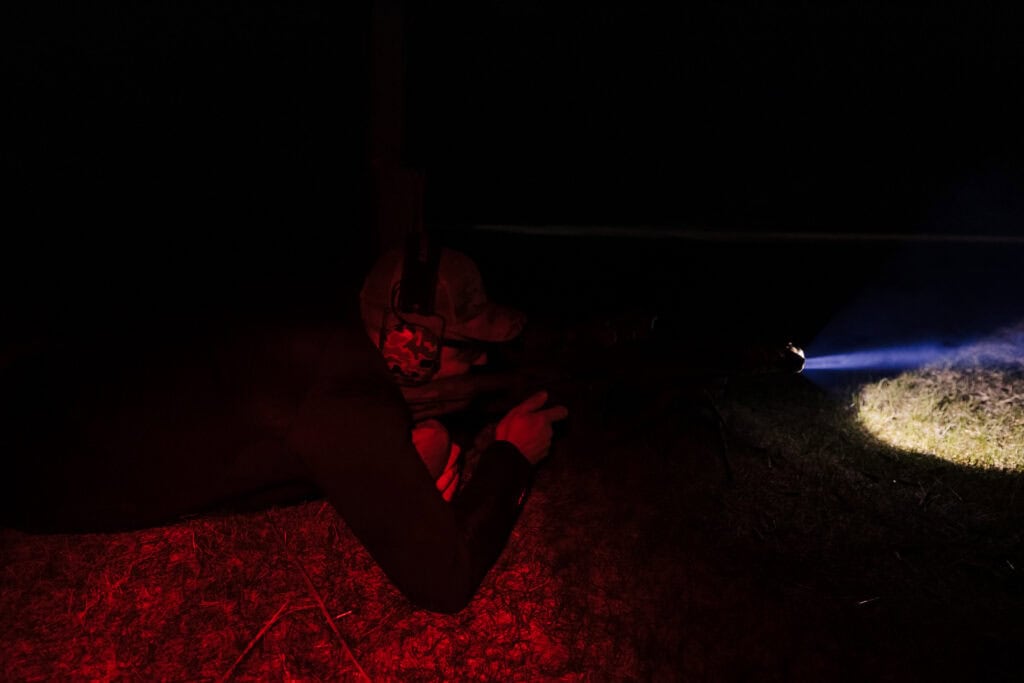
An elevated observation position may improve the lighting picture by reducing the amount of grass, scrub, or other foreground vegetation between the light and the subject. Foreground vegetation can block, scatter, or create shadows in the light path. Elevation may also improve the observer’s view of the scene, but it is not a guarantee of better identification.
Agencies should test this as a training variable rather than treat it as a universal position recommendation. Compare what can be confirmed from different safe observation points and document which details change.
A two-person observation process can divide responsibilities. A trained light operator manages illumination under agency direction while the sniper or observer concentrates on observation, communication, and decision-making.
This can reduce task saturation, but it also creates coordination risks. The team should not assume that illuminating an object automatically confirms the observer’s interpretation. The light operator and observer must preserve the distinction between an illuminated image, an observed fact, and an identification conclusion.
White light can reveal the team’s location or presence. That is an important tradeoff even when the situation is not a counter-sniper problem. Illumination may improve identification while also changing what other people can see and how the scene develops.
The correct training question is: What information did the light provide, what did it expose, and did the gain in reliable identification justify the change under agency policy and the circumstances?
A low-light report should help the rest of the team understand what was observed and how reliable the observation is. It should distinguish direct observation from interpretation and should identify details that remain unresolved.
Your agency may have specific terminology or radio procedures. This article does not create a universal phraseology. The instructional principle is broader: do not allow uncertainty to disappear as information is repeated.
Basic learners should describe what they can directly observe. Advanced learners should review whether their words preserved the uncertainty, lighting conditions, and basis for any personnel-identification claim.
Low-light sniper training should include recurring instruction, documented evaluation, and review. A one-time qualification does not demonstrate competence in every low-light observation or decision-making problem.
A practical evaluation record can include:
This creates a training record that can be reviewed by instructors and supervisors. It also helps agencies identify whether the program needs more work in observation, communication, illumination, policy, or documentation.
A basic sniper program should teach the human factors first. Students should recognize lighting conditions, understand the difference between movement and identity, describe observations in plain language, and acknowledge when identification is not supported.
An advanced sniper program should require learners to critique ambiguous observations, explain how expectations or familiarity influenced interpretation, review changing confidence after illumination or repositioning, and evaluate communication between the observer, light operator, command, and other personnel.
An agency instructor program should then sustain the standard. The goal is not merely to pass a low-light block. The goal is to build a repeatable process that can be taught, observed, documented, reviewed, and improved.
For additional context on closing the information gap before a decision is made, read HTTG’s article on LPVOs as a de-escalation tool and information-gathering resource. The same core idea applies even when no magnified optic or advanced imaging device is available: better decisions begin with accurately understanding what the observer does and does not know.
Agencies developing or improving a low-light sniper program can build the progression through HTTG’s instructor-led courses:
HTTG’s cross-course approach helps agencies connect low-light observation and decision-making to the systems their personnel actually use. The specific training content, equipment, and performance standards should be confirmed against the current course outline and agency policy.
HTTG delivers mobile law enforcement training for agencies that need practical instruction without sending an entire team across the country. To discuss hosting a course or building a sustainable training plan, contact High Threat Training Group.
The absence of NVG or thermal does not eliminate the need for disciplined low-light training. It makes the principles more important.
When the visual picture is incomplete, the professional standard is not to manufacture certainty. It is to understand the limits of unaided vision, use available illumination responsibly, separate presence from identification, communicate what is known and unknown, and review whether the training program actually tested those abilities.
That is how agencies build responsible, capable, and confident performance in low-light conditions—whether the team has advanced imaging equipment or not.
HTTG applies low-light concepts across Basic Sniper, Advanced Sniper, LPVO Instructor, and RDS Instructor training. Agencies can review HTTG’s Advanced Sniper Skills Course, explore LPVO Instructor Training, or develop low-light RDS instructor capability through the RDS Instructor Course.
For agency-hosted instruction and a sustainable training plan, contact High Threat Training Group.