MedVac Support Vehicle for Vehicle Suppression

Vehicle suppression operations demand planning. Teams identify the vehicles that will contain the suspect vehicle, the personnel responsible for each role, communication methods, and possible arrest or barricade transitions. Yet many law-enforcement plans omit a critical platform: the vehicle intended to support an injured officer.
 
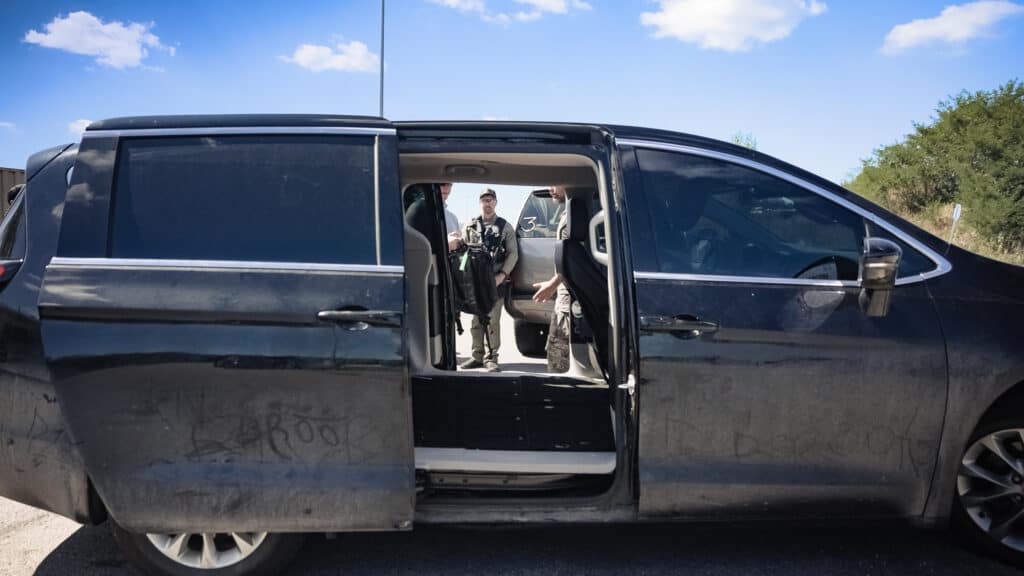
A MedVac support vehicle for vehicle suppression gives the team a planned capability to move a casualty, access additional medical equipment, continue trauma care, and begin evacuation when an ambulance cannot immediately reach the operational area.
 
Without that capability, officers may have individual first aid kits and good intentions but no protected space, no designated driver, no casualty-loading plan, and no coordinated means to continue care while moving to the next level of medical support.

The Missing Vehicle in Many Containment Plans

Videos of vehicle pins and containment operations often show the enforcement vehicles that establish control of the incident. They rarely show a dedicated medical-support vehicle staged as part of the operation.
 
That absence creates a serious planning failure. An injury can immediately change the mission. The team must still manage security and communications while also moving the casualty, accessing equipment, coordinating with emergency medical services, and preparing for evacuation.
 
If the team has not discussed those decisions before the operation, they will be made under pressure after someone is injured.
 
The National Tactical Officers Association recommends that high-risk incidents include a medical threat assessment, coordination with local emergency medical services, casualty collection points, medical staging areas, and consideration of conditions that may affect performance and mission success.
 
A MedVac support vehicle can help carry out that medical plan, but only when the vehicle, personnel, and contingencies are assigned before the mission begins.

What Is a MedVac Support Vehicle?

In HTTG’s training context, a MedVac support vehicle is a designated van or truck integrated into the operation to support casualty movement, continued trauma care, medical-equipment access, communication, and transfer to emergency medical services.
 
The vehicle does not replace an ambulance, a tactical medic, a paramedic, or the local emergency medical system. It is a planned bridge between the point of injury and the next appropriate level of care when operational conditions delay a conventional EMS response.
 
The platform should have one clear operational purpose: support the team’s medical contingency plan without creating another unmanaged risk. Its location and movement must account for the threat, access routes, available egress, the operational commander’s plan, and the agency’s medical protocols.
 
A MedVac vehicle is not a last-minute ride. It is a designated medical capability built into the mission plan.

Place the MedVac Vehicle in SMEAC Planning

HTTG instructors teach teams to include medical contingencies in SMEAC or SMEACC mission planning. The format may vary by agency, but the principle remains the same: medical responsibilities must be formally briefed, not assumed.
 
At a command-and-coordination level, the medical plan should identify the assigned MedVac vehicle and driver, qualified medical personnel, the vehicle’s planned location, primary and alternate movement routes, loading responsibilities, additional equipment, communications procedures, and the intended emergency medical services handoff point.
 
Teams should also discuss what changes if the original plan fails. A vehicle may be blocked, damaged, or unable to reach the casualty. The casualty count may exceed expectations. Emergency medical services may be delayed or unable to enter the immediate area. These are planning questions, not problems to solve for the first time during an evacuation.
 
HTTG’s incorporates mission planning, medical and contingency considerations, practical exercises, and scenario-based application. The focus is on helping agencies build a system that reflects their actual personnel, vehicles, geography, medical protocols, and operational needs. This is also taught in HTTG’s  UC Rescue training.

Why a Van or Truck Can Matter

A van or truck can provide more usable room than a standard enforcement vehicle for a casualty, caregiver, medical equipment, communication, and continued care. That space alone does not solve the problem. The team must understand how the vehicle will be used, who will occupy it, and what care can realistically be delivered while it is moving.
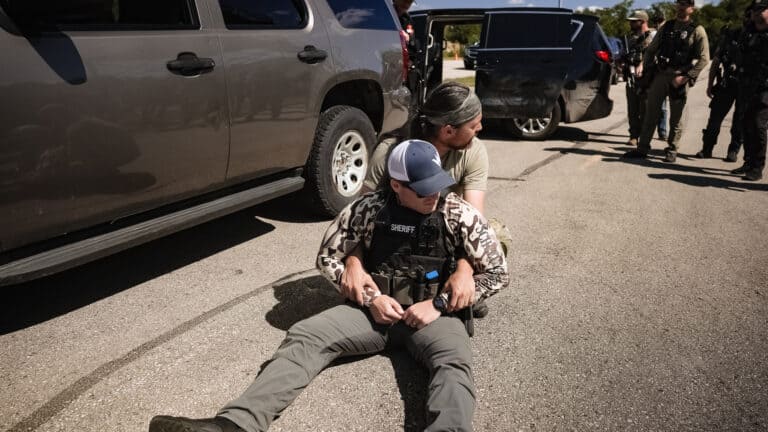
Inside a moving platform, the caregiver may encounter limited lighting, noise, restricted space, shifting equipment, turns, braking, and unstable footing. Skills that appear straightforward during a static medical drill can become difficult when a vehicle is moving several miles toward a transfer point.
 
HTTG instructors show students how to load an injured officer into a van or truck and use the vehicle’s interior to establish leverage and stability while providing trauma care. Students then work through the challenges of patient access, equipment placement, communication, reassessment, and casualty protection while the support vehicle is in motion.
 
The purpose is not realism for its own sake. It is to expose the gaps that static training can conceal.

Medical Equipment Must Be Accessible, Not Merely Present

Teams often discover that a medical bag is difficult to access once a casualty is loaded into the vehicle. Equipment may be placed where the caregiver cannot reach it. Supplies can shift during movement. A standard IFAK may not be sufficient for more than one casualty or for sustained care while awaiting a handoff.
 
HTTG’s training includes an in-depth review of medical bags and medical-equipment placement inside the MedVac vehicle. Students evaluate whether their equipment is available when needed and whether the platform supports the team’s actual casualty-care plan.
 
The Joint Trauma System maintains current Tactical Combat Casualty Care guidance, recommended devices, and skill sets by provider level. Agencies should ensure that their equipment choices and medical procedures align with current guidance, medical direction, local protocols, and the scope of practice of the people expected to provide care.
 
Medical equipment is not a checklist item. It is part of a working system that must support the casualty, caregiver, and team during the most difficult portion of the operation.

A MedVac Vehicle Must Be Paired With Medical Training

A vehicle alone is not a medical plan. Teams still need medical training, self-extraction and team-extraction practice, communications discipline, a casualty-care process, and a clear relationship with emergency medical services.
 
Part 1 of this series explains why must extend beyond carrying an IFAK. 
 
For a broader overview of vehicle pins, containment, and the operational risks that require structured training, read .

Build a Program That Can Handle the Worst Day

HTTG instructors have taught vehicle suppression, PINS, and containment tactics for five years. Their experience includes more than 100 real-world vehicle-pin missions, including successful operations and failures that revealed important lessons.
 
They have trained hundreds of law-enforcement students from SWAT teams, specialized units, task forces, and general patrol. Many students attend because their agency needs to develop or sustain a vehicle-containment program. Others learned the method informally but have not received formal instruction on the planning, medical, and program-development requirements that make the tactic sustainable.
 
One lesson remains consistent: a vehicle-containment plan is incomplete if it does not include a medical contingency and a practical way to move and care for an injured person.
 
A team should not discover the missing vehicle only after someone is hurt.

Train the Entire Mission

Vehicle suppression does not end when the suspect vehicle stops. The mission continues through custody, casualty care, extraction, evacuation, transfer to medical personnel, and after-action review.
 
HTTG’s prepares law-enforcement teams to address those connected responsibilities. The course is designed for specialized units and patrol officers who need to contain vehicles, plan high-risk arrests, integrate medical contingencies, and build a capability their agency can sustain.
 
Agencies that need vehicle-containment training should plan for the operational vehicles, the people who use them, and the medical-support vehicle that may save a life.
COMMON QUESTIONS

FREQUENTLY ASKED QUESTIONS

A MedVac support vehicle is a designated van or truck integrated into the mission plan to support casualty movement, medical-equipment access, continued care, communication, and transfer to emergency medical services. It does not replace an ambulance or licensed medical provider.

Vehicle containment can involve close proximity, vehicles, high-risk arrest activity, and rapidly changing conditions. A designated support vehicle helps the team prepare for casualty extraction and continued care when an ambulance cannot immediately reach the point of injury.

No. The support vehicle is part of the team’s contingency plan. Emergency medical services, medical direction, agency policy, and appropriate licensed medical providers remain essential.

Law-enforcement teams that conduct or support vehicle containment, high-risk vehicle stops, tactical apprehensions, or related operations should evaluate their medical needs based on their staffing, geography, equipment, policies, training level, and local EMS capabilities.